Granpa’s Farm and Granny’s House

Dorothy Graham Gast

My maternal grandparents were Mary Florence (Mamie) Cork and John Leland Barton, both born at Ralph, Alabama in 1877 and residents in that community until their deaths in 1963 and 1972 respectively. Although my family lived 8 miles away at Romulus I spent as much time as I could at my Barton grandparents’ house.  As a preteen I was loaned out much of each summer to help my aging grandparents on their farm.

Leland Barton house has been destroyed by a tornado

bartonhouse

Their farm was about one mile back in the woods behind Wesley Chapel Church at Ralph, Alabama, where they had been saved, married and enlisted to do God’s work.  Each summer we went to clean the graves of all four of their parents, a son, and a granddaughter. Nearby was the grave of Granny’s sister, Aunt Beulah, who had never married and had bought a tombstone and kept it at the foot of her bed until the time for it to be used.

The grayed clapboard house nestled between large oak trees and was framed by a weathered gray picket fence to keep dogs in the yard and chickens out. A porch deep enough for a family to sleep on pallets on a hot summer night stretched the width of the house and a huge rain barrel caught water off the steep tin roof to be stored for baths and Granny’s flowers.  Rockers of all descriptions were separated by cane bottomed straight chairs and hemmed in by a swing. Pots of flowers lined the rims of the porch and a child must water them before dark if rain had not come.old rocking chairs

Long front steps were deep, too, so that we children could sit on a lazy afternoon after a huge Sunday dinner and listen to the hum of conversation from the grown ups in the squeaking rockers. Family trees were outlined and filled in by stories of each branch. Cousin Jim who had been dead 40 years became as real to us as the faces now remembering his exploits. At night when the house clung to the day’s heat, three hours in the moonlight were pleasant preludes. Sometimes summer lightning might be seen on the horizon and promising breezes cooled us for sleep.

A door opened to the central hallway 15 feet wide running the length of the house and enclosed at each end unlike the open dogtrots of many neighbors. It was a place for guests greeted, and small children to be contained.

The parlor was on the left with a wicker settee and side chairs facing the chestnut pump organ.. Pictures of Mr. and Mrs. Thomas Hunnicutt Barton, my great-grandparents, looked down so sternly that I had difficulty picturing Alabama Virginia Barton as the loving mother-in-law Granny described with great tenderness. A wood burning heater was vented through the closed fireplace making a more efficient heating source. Only the overflow of company ever went in there since most visiting was done on the porch or in the bedroom across the dogtrot.pump organ

The heart of the house was the dining room. The pine walls were dark with age and smoke and the long homemade pine board table was 12 feet long with chairs at the ends and one side and a bench for children on the other. A china cabinet held plates, cups, saucers, glasses and serving dishes. Each evening Granny and Grandpa ate side by side with their backs to the window as they talked about the day and ate warmed over dinner over the oilcloth table covering. Supper was the lighter meal so it was reheated to go with a fresh pone of cornbread and a glass of buttermilk. As I faced them across the table I thought they were like a worn pair of shoes, so well matched,yet soft and comforting.

A step down into the kitchen led to the water bucket and the aluminum dipper by the sink. Under the southern window the small metal covered table served as cooking and eating area for two or three and there we had our breakfast.  The Warm Morning cook stove reigned in the space near the back door with a warming cabinet on top to store baked sweet potatoes or leftovers and had a large tank for a constant supply of hot water.water bucket and dipper

The door to the left opened to the 6 by 8 foot pantry which held the oak icebox and the flour and corn meal bins that held 50 pounds of each with a cedar dough board for making biscuits. The five gallon lard can was nearby. Smocks like the ones French painters wear in cartoons hung on pegs with the sunbonnets to protect fair skin from the bright summer sunlight. The tails of the smocks could be turned up into makeshift baskets for picking peas or fetching eggs from their nests.

On the L shaped back porch I held squirrels shot early morning in the cornfields while Grandpa skinned them for a breakfast treat of squirrels in brown gravy over Granny’s golden biscuits. Extra biscuits were filled with fig preserves and dripped butter when I bit into them. They let me drink the strong coffee perked in the pot always found on the back of the stove if I tamed it to beige with cream.biscuits

There were many things a child could do to make themselves useful. Water was pumped from the well for drinking, cooking or washing. Many buckets were needed to fill the big black wash pot and the tin tubs used for scrubbing clothes and for rinsing. After enduring washdays I learned to protect clothes for a second or third day to reduce the washing needed. On a hot afternoon I could take a jar of cold water to the field where Grandpa was plowing or ride old Maude the half mile to the mailbox along the gravel road.

Perhaps I was Granny’s favorite. I secretly thought so. Most of the other grandchildren were grown and married or teenagers that would be bored staying away from city comforts.When I fed the chickens and filled their trays with clean water I thought It was fun to be the center of attention and given privileges granted only the single child. No annoying siblings could tease or frustrate and life was good.

(Visited 64 times, 2 visits today)

About Dorothy Graham Gast

Dorothy Gast lives in Romulus, Alabama on the Graham family farm. She taught in Tuscaloosa County Schools for nearly 30 years. She has a “Mine, yours, and Ours” family. She has volunteered in numerous organizations after her husband’s eight year struggle with Alzheimers’ ended. See more of Dorothy Graham Gast stories at http://grahamgasthistory.blogspot.com/2010_05_01_archive.html She helped organize a volunteer fire department after she was 60 and served as board secretary and nationally certified firefighter after extensive training. Her attempts to get the community reading failed, but she contributed books to the new Sipsey Valley high school from the library in her home friends helped her establish. She is known locally by the silhouettes she cuts free hand of children. She began to write nostalgia stories after a grandson asked her to write down the stories often told at family events.

– See more at: http://alabamapioneers.com/perhaps-grannys-favorite-secretly-thought/#sthash.UzMI58io.dpuf


John Cork

John Cork was hardly settled  before the Americans began their war for independence. Proof that John Cork served durin the Revelutionary War was found in the Historical Commission Building in Columbia, South Carolina.Stub entry #82 of the Revolutionary War claims states that on October 29, 1782 John Cork was paid 17 pounds for 119 days of duty as a horseman.

John Cork was the only Cork listed in te state of South Carolina when te first census of the United States was taken in 1790. He had living with him three males under 16 years of age and 6 femailes in the household. John Died February 15, 1798 in Woodward, South Carolina and is buried in the cemetery at Concord Presbyterian Church located on highway #321.John was married to Isabella Elizabeth Kilpatrick,daughter of Robert Kilpatrick of County Antrium, Ireland.  John Cork’s original marker was a small handmade stone with the inscription “JOHN CORK, died February 15, age 53,”

He was one of the builders of the church. The church was rebuilt in 1818 after a hurricane had destroyed the original building. The church was still being used in 2004 when we attended a reunion service, but there are only a few people who  attend.

The original house of John Cork built in 1775 is still standing but is unoccupied. It has had renovations with siding added and a tin roof on top.  The house is about a mile and a half off highway #321 in the Woodward community..

The original marker has been replaced by a large bronze plack plced there by the Daughters of the American Revolution and simply states “JOHN CORK, 1745-1798” The church was rebuilt

Second and Third Generation Corks in America

John Cork was the oldest son of john Cork and Elizabeth Kilpatrick Cork and was born in Woodward, South Carolina in 1781 and died there October 1, 1856. He is buried in the Concord Presbyterian Church Cemetery in Woodward, South Carolina. His wife and many of his children are buried there also. He married Mary Huffman daughter of Daniel and Elizabeth Huffman.

The youngest son of JOhn Cork in Woodward, South Carolina, William Cork received the plantation and home of his father when his father died . William and his wife, Mary Mobley Cork, lived in the old home place until early 1832. They sold the home and 194 acres to James Mobley for $2121 on December 24, 1831. It was located on the Bushy Fork of Little River in Fairfield County, South Carolina..

August 31, 1832 William obtained his first grant of land in western Tuscaloosa County, Alabama. He received five more grants that gave him a total of 440 acres.This was later called the Marlowe place. With all his family he moved here in 1832. His children married and raised their families in the same area. William and succeeding generations are buried in the Pleasant Grove Methodist Cemetery in Jena.

His children were:

1.

Alexander Cork 1810-1884 married Margaret Huffman.1815-

John Cork 1811 in South Carolina died 1890 in Alabama. Married Jane Dickey 1814-1890. Both are buried in Jena. Hi son James R. (RED JIM) was my great grandfather.

.

Never Go to Walmart to see if you are having a Heart attack

Share this important story with your friends!

Never go to Walmart go see if you are having a heart attack

by

Dorothy Graham Gast

Early morning on April 6 after a delightful evening with friends, I felt activity in my chest. No real pain, but the feeling that a couple of large mice might be fighting under my breastbone. My pulse rang in my ears; not the normal regular 4/4 rhythm, but a wild and crazy erratic beat. I woke my sister and asked her to take my blood pressure. Both her machines were as undependable as the noise in my head. We decided to get dressed and go to Walmart to check the bp on their equipment. I still had no pain.

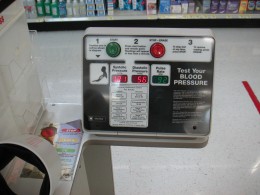
When we tried the Walmart machine something was wrong with it, too. 256/136; then 85/50. No pulse reading. Ridiculous!!!! I could hear the sound in my head.emergency-room-sign

So after some deliberation we went to DCH Northport ER.

When they heard the word heart, I was rushed into an exam room.

emergency-room

Instant service, BP(not gasolene), IV, EKG,

“Give her a shot in the IV…….Shoot her again……Another one!!!”

Now I was getting nervous. Their faces did not reassure me. No real pain, just the stupid non rhythm roaring in my head.

“OK, that’s better.” Everyone breathed, even me.

When they spoke of electric shock to get the heart back in rhythm I wasn’t happy. They put the shock pads in place in the center of my chest and under my left arm. A mask came down over my face.

Hours later I woke up with a brand new pacemaker. Two days in the ICU and I was released to the care of my sister with instructions for my confinement and restrictions on my behavior. My visitors from Scotland helped enforce the recovery guidelines. A week later I’m home after promising to behave and call someone to drive me if I need to travel.

Praise the LORD for his Goodness and thanks to all of you who prayed for me. I felt the prayers and have had little pain or difficulty. I will be resting and following doctor’s orders. No driving for 2 weeks may be the hardest part.

Now is a good time to get serious about losing weight, walking a mile a day, and slowing down.

I’m lucky! If something is happening in your chest, have a doctor check it out. No pain does not mean no danger.blood pressure machine

Don’t go to Walmart!

WHERE DO I START? Hints and Tips for Beginning Genealogists with On-line resources
http://ws-na.amazon-adsystem.com/widgets/q?ServiceVersion=20070822&OneJS=1&Operation=GetAdHtml&MarketPlace=US&source=ss&ref=ss_til&ad_type=product_link&tracking_id=alabapione-20&marketplace=amazon&region=US&placement=B005348HU8&asins=B005348HU8&linkId=DRD5WR5AEK5XOE6T&show_border=true&link_opens_in_new_window=true

Check out genealogy books and novels by Donna R. Causey

http://ws-na.amazon-adsystem.com/widgets/q?ServiceVersion=20070822&OneJS=1&Operation=GetAdHtml&MarketPlace=US&source=ss&ref=ss_til&ad_type=product_link&tracking_id=alabapione-20&marketplace=amazon&region=US&placement=B005LIX4PE&asins=B005LIX4PE&linkId=SVVWVPZU7I7KE3EG&show_border=true&link_opens_in_new_window=truehttp://ws-na.amazon-adsystem.com/widgets/q?ServiceVersion=20070822&OneJS=1&Operation=GetAdHtml&MarketPlace=US&source=ss&ref=ss_til&ad_type=product_link&tracking_id=alabapione-20&marketplace=amazon&region=US&placement=B00GT0G9GE&asins=B00GT0G9GE&linkId=M6W2QJ2DMHXAKIY3&show_border=true&link_opens_in_new_window=truehttp://ws-na.amazon-adsystem.com/widgets/q?ServiceVersion=20070822&OneJS=1&Operation=GetAdHtml&MarketPlace=US&source=ss&ref=ss_til&ad_type=product_link&tracking_id=alabapione-20&marketplace=amazon&region=US&placement=B00GGNB6TO&asins=B00GGNB6TO&linkId=Y6P6AQFEFIOZC77Y&show_border=true&link_opens_in_new_window=true http://ws-na.amazon-adsystem.com/widgets/q?ServiceVersion=20070822&OneJS=1&Operation=GetAdHtml&MarketPlace=US&source=ss&ref=ss_til&ad_type=product_link&tracking_id=alabapione-20&marketplace=amazon&region=US&placement=B00OWMY5M6&asins=B00OWMY5M6&linkId=S3S5VMBYWP5YZTWB&show_border=true&link_opens_in_new_window=true

About Dorothy Graham Gast

Dorothy Gast lives in Romulus, Alabama on the Graham family farm. She taught in Tuscaloosa County Schools for nearly 30 years.
She has a ”Mine, yours, and Ours” family. She has volunteered in numerous organizations after her husband’s eight year struggle with Alzheimers’ ended.
She helped organize a volunteer fire department after she was 60 and served as board secretary and nationally certified firefighter after extensive training.
Her attempts to get the community reading failed, but she contributed books to the new Sipsey Valley high school from the library in her home friends helped her establish.

She is known locally by the silhouettes she cuts free hand of children. She began to write nostalgia stories after a grandson asked her to write down the stories often told at family events.http://Grahamgasthistory@blogspot.com


My name is Dorothy Graham Gast. The Graham part tells local readers what farm I was raised on and where I live now.

Thirty years in the classroom and sixty years of studying family history have left me with a lot of information to pass on for future generations. Most people don’t get really curious about family history until their hair turns grey (or disappears) and the elders are not their to share with them.  Everyone says, “Wish I had asked Grandma about…” and regrets that she is dead or too old to remember.

Since I’m still on the green side of the grass I and putting together information that may be significant, intriguing, factual, or boring according to your point of view, but available to anyone ho has wished for it. Feel free to copy and paste or send a link.