Cyprus 2000

Cyprus 2000 – Traveling during Y2K

by

Dorothy Graham Gast

In the fall of 1999, newspapers were full of speculation about Y2K. As the weeks neared January 1, 2000. It was predicted that computers would fail all over the world and everything from the electrical systems to government itself would flounder. People stockpiled foods that could last without refrigeration, electric stoves, or microwaves.

My sister and her husband were working in Cyprus and had invited me to bring a friend to visit for a couple of weeks. I noticed that airline flights had become cheap so I called a friend to see if she was interested in a trip to Cyprus.

Ann Willard, a fellow teacher, had accumulated flight miles and could get away February10-28. We left Birmingham after lunch, had a short layover in Atlanta and arrived at Gatwick Airport in London about 7:00 am.Map of Cyprus 1:175.000

My sister had made arrangements for plastic containers holding 70 pounds of goods to be part of each luggage. The foodstuffs that could not be bought in Cyprus were mixed with various dry goods and literature. In Birmingham the airline refused the large plastic containers saying they were too heavy. Numerous telephone calls got the tubs weighed and passed for boarding.

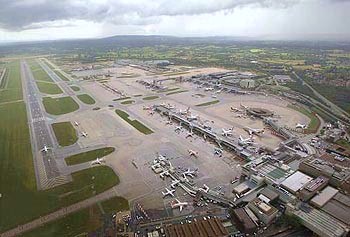
Gatwick airport from the air

A similar situation happened in Atlanta with the airline staff saying they would take them to London, but the smaller airline would not take them farther.

Heathrow_T5

When we landed at Gatwick, we had to catch a bus to Heathrow for a flight to Cyprus. Can you imagine London traffic that time of day?  Our apprehension grew as the time grew shorter. If we missed the flight we’d have to wait another 24 hours.

On the bus we explained our recent difficulties and risk of missing the Cyprus flight to a distinguished looking gentleman across the aisle. He left the bus ahead of us, led us to the line for our flight and talked to the attendant and baggage carriers. We saw the precious plastic containers move up the ramp into the plane as we were very graciously ushered aboard. I don’t know what he said, but he worked magic getting us through red tape and on the Cyprus flight.

limasol

My sister and her husband met us at Larnaca airport  for the trip to Limassol.

The next morning we boarded ship to Israel. We seemed to be the only Americans on the cruise. People were very kind and helpful, even when they did not know what we were saying. There were many who could explain currency, directions, or menu selections.

Israel

The Holy Land was very cold and wet and the precipitation was either rain or sleet. In Bethlehem we were surrounded by sellers of all ages. Against instructions, I bought an umbrella and hat and almost caused a riot. The guide was not happy, but my head was finally warm. Despite the warnings about terrorism from friends back home, I felt very safe on the tours. There was so much to see and 12 hours could give only a tiny glimpse of the majesty of this place.

EGYPT_SS1

At twilight we reboarded, had dinner and a floor show and an early night in bed. We had lunch in Cyprus, took hot showers and boarded another ship to Egypt.

When we woke next morning we looked out on Egypt. There was more green than I had expected and more modern buildings. After admiring the Sphinx and the pyramids, we turned down the opportunity to ride camels. We had been warned that once you were up there you might have to pay a ransom to get down. The famous museums were a letdown.

Choppy seas  greeted us as we prepared for our return to Cyprus, but the unpleasantness was relieved by dinner with our assigned tablemates from Scotland. Bill and Mary Muir explained that they were from Dundee in the Angus area which didn’t tell us much until they said they were north of Edinburough.  We learned about St. Andrews, the original golf course, and the castles nearby. Little did I realize how precious this friendship would become and that we would visit each other.

We spent the next few days exploring the Greek part of the island. As much as I love history, my mind was overwhelmed with facts and figures.. With all the sightseeing the best part was spending quality time with family. Lemons as big as grapefruit picked from trees in our hosts’ yard made delicious hot lemonade to warm us from the chill of the cold damp winds.

On one of our outings we noticed that most women wore black. The stores gave a choice of black, beige, or white garments. We were told that happy married women dressed in black to indicate they weren’t interested on attracting suitors.

As we walked on the beach in front of hotels, and older man came up and asked, “Americans?”

“Yes”

“Where in America?”

“Alabama.”

“Ho, ho” he laughed.  “Alabama, Bear Bryant. I lived in Ohio with my son for many years, then I come back home.” He gave me a big hug and smacked me on the cheek.

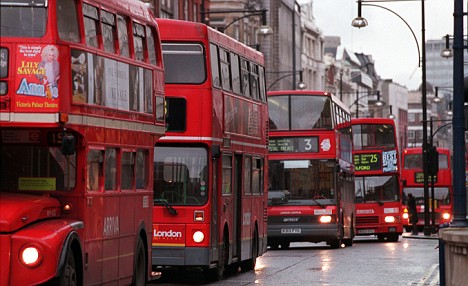
The next leg of our trip was a weekend in London visiting my stepdaughter, Ann and husband, Reg. We stayed a small inn in walking distance from their house. Public transportation made sightseeing much simpler. We rode a commuter train into London, three double-decker buses downtown, and the underground subway to outer points. One day we must have walked 15 miles.WARNING:  PICTURE SCANNED FOR OVERNIGHT NEWS Buses

The weather was cold and very windy and the guards at Buckingham Palace did not have on the bright red coats. As I hurried to catch the others I fell face down in front of the gates. No one except my companions even noticed.Harrods

So we went to Harrod’s, looked at all the expensive stuff, then headed upstairs for high tea. And it was high. I ordered the cream tea with crumpets and jam with an assortment of tiny cucumber sandwiches. The other got a”cuppa” teas and we shared out loot. We added crackers from our backpacks and had our own party to the delight on those around.

The total trip  to Cyprus and England cost less than a trip to the beach in Alabama for the same amount of time. Staying with relatives helped, but taking advantage of the Y2K scare made the difference.

Tulips for Stormy

Prayer, Tulips and Miracles, this Story Will Touch Your Heart

PINK TULIPS


by

Dorothy Graham Gast

In Spring 1999 I planted several packs of tulips bought off a late season sale table. In April 2000 there were some weak tulip plants peeping from the shiny green leaves of periwinkle, but no sign of flowers. The bed was left undisturbed with spindly tulip leaves hiding among the dominant plants. The early months of 2001 the world was falling apart in our family. After months of our taking Mother to various doctors for her failing health, she was told she had inoperable ovarian cancer on Valentine’s Day. We took her home and she died on March 13.pink-tulip-bud-emerging

My 17 year old granddaughter, Merry, attended Mama’s funeral so swollen with the symptoms of preeclampsia that she had to be helped up and down. When she was admitted to the hospital she had a long and difficult labor. Late the second night the situation became so dangerous that a caesarean was done. Merry’s mother-in-law and I were the only family waiting with the young father.

About midnight while the father was at the nursery looking for his baby daughter, the obstetrician came out to talk to Merry’s mother-in-law and me, great grandmother of the child. He warned us  that there was something wrong with the baby. He said the little one had Down Syndrome and would not live very long. She would be limited mentally, might never walk or talk and might very well experience multiple health problems. He insisted that the family needed to be prepared for the problems and difficulties the condition might bring.Praying-the-Lords-Prayer

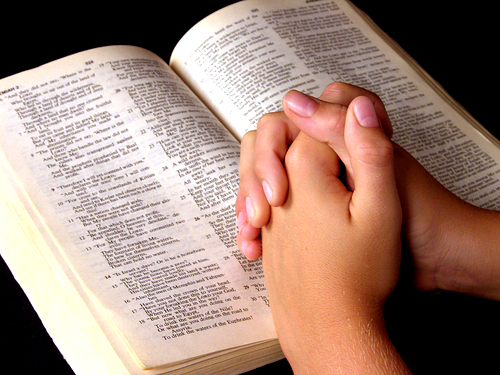
Despite the late hour we called family members telling them the baby, Stormy, had been born and the prognosis was not good. I emailed friends around the world for prayer. There were hundreds of people praying for her from dozens of prayer groups and churches. Stormy was kept in infant intensive care. For three days, all the other family members went to admire the beautiful baby, but I continued to cry out to Heaven. On the fourth day, I took a turn scrubbing up and donning protective clothing to see the baby.

The heavy cloud over me disappeared. There was nothing to suggest that this baby had any defect. Her wide spaced eyes were big and blue and followed movement around her. She was rosy and chubby, but no longer swollen as she and her mother had been at her birth. I opened the tiny hands and found the lines of a normal baby. I knew that she was going to be fine. Tests were sent off to UAB to see if she had Down Syndrome. Three weeks later a report confirmed my belief that she would be normal. I promised that I would do all I could to help this young couple provide whatever care was needed.

The day we brought her home to my house for me to care for mother and child, we turned into my driveway to see 40 huge pink tulips shining between the glossy periwinkle leaves and blue flowers. The same tulips I had given up on were a beautiful display to welcome Stormy home.a-field-of-pink-tulips-ronda-broatch

Stormy was walking at a very early age, making sentences by 18 months. She spent 50 to 60 hours a week with me and we did all the things I had wished to do with my children during the years I was teaching.

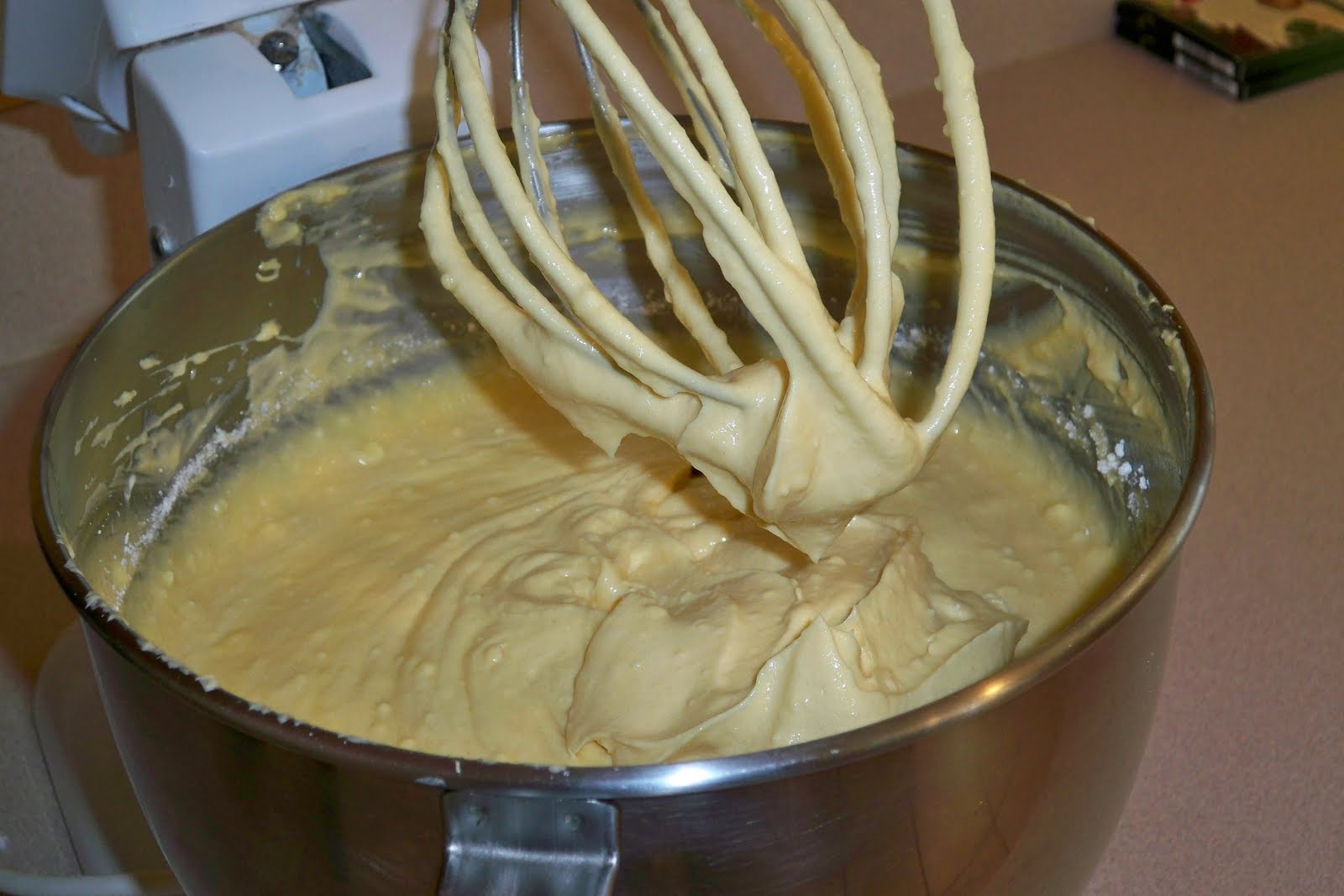
When she was four years old she loved to help me in the kitchen. She loved to choose a cake mix, dump it into the mixing bowl, put in a stick of butter, 3 eggs, and a cup of water and turn on the mixer. I turned on the oven while she over-generously sprayed the cake pan with butter flavored cooking spray.

Since no one believed that she did all the work except taking the cake to and from the hot oven, I made a video of her baking a cake from cake mix and icing it with only verbal reminders from behind the camera. Her detailed explanations were her own, especially when she broke the egg shells too hard and had to fish out bits of the shell from the batter.cake analogy 004

It is almost as if so many prayers with her name on them stacked up in the Requests section of HEAVEN that they continue to bring blessings to her. She is bright, confident, friendly, and very affectionate. She still holds a very special place in the hearts of many who prayed for her during those uncertain times.

pink tulips

THE HOME PLACE

THE HOME PLACE
by
Annice Graham
 
       I don’t know if any of you remember how we happened to have this place. Grandpa  Graham was a sawmill owner. The sawmill was a whole village that moved from community to community as he cut. After much of the timber was cut he sold his mill but kept a store or commissary as it was called in those days across the road from his house. Aunt Lora, Grandma’s younger sister, worked in the store and was the local telephone operator.
Then came the Depression. Grandpa owed a lot of money and had borrowed on his land to pay his workers and his other debts. The farm was lost.
Although Grandpa farmed and later had odd jobs to help make a living, he was not in good health and being deaf made it hard to get jobs. Grandma boarded the schoolteachers and they went to the curb market for years, but never had enough income to hold onto their home. Some of their children weren’t financially able to take on the mortgage; others’ plans did not include taking on this obligation. Daddy Buster borrowed money from Mr. Cleveland Partrich and paid off all Grandpa’s obligations, and secured their home for the rest of their lives.
We bought an antebellum home at Lock 8 that the government was disposing of, tore it down and had the lumber moved to the place where we built the house where our children grew up. Grandpa Barton was in charge of building the house and it turned out to be a more modest style than the original.
Grandpa and Grandma continued to curb market and Grandma went to work as school lunch supervisor at Romulus school next door. Later she went to work at Jemison School in Tuscaloosa,
For several years we had sharecroppers. When John was old enough to plow, Daddy bought an older tractor and we farmed until I went to work as lunchroom manager at Romulus. When the elementary school in this area were consolidated to Fosters, I became the lunchroom supervisor at Myrtlewood.
When our children were going to school at Romulus the teachers would let then come home early to pick cotton, gather corn, or other crops on the farm like peas popcorn or peanuts.
Do you remember how I could help Grandma kill and dress 15 or 20 chickens to carry to curb market? We also helped gather and prepare vegetables and even flowers for market.
Water was always a problem on this farm. We had a 65-foot dug well, which proved to be unreliable. When Grandpa’s well went dry we pumped water up the hill for them. The well could not provide enough water for two families, so Daddy Buster had a 95-foot well bored.
Before that we had gotten water from the school well. The children carried water for the school a quarter of a mile for me to wash clothes the next day. I times I had to carry clothes to the well in front of the sharecropper’s house near the back field almost as far as the school house. It was about 20 feet deep with plenty of water.
With three small children I would hitch the mule to a ground slide, load the smallest children on the dirty clothes, and soaps to make the trip down the crooked trail to the well.
 
After getting the children to a safe area I would draw water out of the well to fill the tub and a big black wash pot while Dorothy was keeping the others safe away from the well. Small limbs and leaves were burned under the washpot to keep the water hot, hopefully boiling, in the washpot. Then I used a stick to pull the clothes out to the cold water in the tub to hand scrub, rinse and wring dry enough to hang on tree limbs, bushes and sometimes grass.
I carried a few biscuits with butter and syrup poured into a hole in the biscuit and we ate them for our lunch while the clothes dried. You could put pant stretchers in men’s pants so they would need little ironing before wearing. When clothes were dried we had to fold them, put clean clothes back in the tub, set the babies on top, and head back to the house to cook supper and feed up before Daddy got home.
When Dorothy was about 5, John 3, amd Mary was a baby not old enough to walk, we hung the clothes on the pasture fence. John wanted to help so he went to the wash pot and stepped on live coals and blistered the bottoms of his feet. For weeks I had two babies that could not walk. He soon learned to crawl to get his toys or something to eat.
That is why I loved my first washing machine so much. When we moved to Pascagoula, Mississippi, we bought a washing machine and I took in washing from our boarders and all the women who worked in the Engel’s shipyard. I would deliver the clean, ironed clothes in Johnny’s little red wagon with the kids following behind. I made as much as Daddy.
That is why I always enjoyed having a washer and dryer in my later years. It was a joy to have an easier way to do a necessary job.
 
Annice Graham
in My Memories
c 1989

John Leland Barton

John Leland Barton

Mr. Leland was 5’7”, weighed 140 pounds in his 70s, and looked in silhouette like a 14 year old boy not finshed growing, but I heard tales about him that were greatly different from the Grandpa I thought I knew. I never knew him to drive a car nor a tractor. He farmed land that had belonged to his father that was almost a mile from a gravel road.

But politicians from Montgomery made their way to his out of the way farm to request his support in their election campaigns. He wasn’t rich, was not a society person, yet influential  people  came to seek his help. He served as Beat Committeeman for the Democratic Party for 65 years; he was a constable even longer . He was re-elected every four years.

Rumors said when a fight happened at a dance, someone would go after John Leland Barton to settle things down. It was said he’d walk in and say, O.K. boys, that’s enough “and the fighters would back away from each other. I asked him what kind of gun he carried as constable.

He replied “If you always say what you mean and mean what you say, you don’t have to carry a gun.” It didn’t make sense when he said it to me   and doesn’t really make sense to me now, but it worked. Maybe it was because folks knew when you had a family member dying, he would come sit with the family, then help get things ready for the funeral. If a house burned , he would help fight the fire and bring his tools to help you rebuild. He’d bring his wife, Miss Mamie, over in his wagon to help bring a baby into the world, or help doctor your only horse that was injured. None of his children were seen giving him back talk, yet he didn’t holler or make a lot of threats. He just looked straight at people and they listened.

In 1985, Tuscaloosa News Staff Writer, Bob Kyle, wrote a news story entitled “Little Bit of Rough Weather Can’t Stop This Democrat” about “J. L. Barton, 88, of Ralph, Alabama. Five inches of snow would not prevent him from showing up.. Barton said he had a duty to do, so he got his son, A.B. Barton to drive   him to the scheduled meeting of the Tuscaloosa County Democratic Executive Committee. He was one of the oldest members of the group and the only one that showed up at the court house that Saturday morning.

The picture that accompanied the article showed him heavier since he had stopped doing his own plowing. His lined face was as determined as ever.

The article quoted, “Yes, sir, I started out as a Democrat and I’m going to end up as one. I have a lot of friends who claim they are Republicans, but I don’t hold anything against them. I’ll like them as long as they don’t try to convince me.’

Barton went on to tell of his nine children, eight still living, 28 grandchildren and 36 great grandchildren, and many of the next generations. People come from all over the Southeasst seeking his extensive memory of family relationships to complete their family trees.

At the age of 95, he was recovering from a broken hip at a local nursing home when family members were called.in because his heart was failing. I drove my mother to the home.  When we entered his room two other daughters were there. He looked at me and winked and said, “This must be the day I’m to kick the bucket to get so many folks over today.” He joked about his own death until his breath got too short for him to talk.   He told a grandson that when my grandmother got dementia he knelt by her bed and asked God to let him live long enough to care for her. He said, “If I’d known I’d live this long I wouldn’t have prayed so hard.”

He was buried with his 50 year Masonic pin in front of the church where he had been Sunday School Superintendent and where he had been married 73 years before.

——————————————————

Daddy Buster

SouthWest TC

Life in southwestern Tuscaloosa County , past and present

Lawrence (Buster) Graham

                                                                                                                             By Dorothy Gast

          Buster Graham was a series of contradictions in a tall, lanky dreamer. He made his living by manual labor, but his life was in the beauty of a wider existence. He bought an expansive antebellum home scheduled to be torn down to make for the locks on the Warrior River only to find it reshaped as a shotgun house on the family acreage by his father-in-law who was the builder. Only the intricately carved mantelpieces with imported Italian tiles maintained the 1830s glory Daddy envisioned for his family.

In the Tuscaloosa County Road and Bridge machinery repair shop, the guys called him “Mama Graham” behind his back because of his conscientious attention for details, his proper grammar, and his refusal to use cuss words and vulgarisms. They said he thought he was too good to talk like regular people. He did not even own a gun and the word was out that he played the piano for fun. Why, his coveralls were as patched as everyone else’s.

He always planted 10 to 15 acres of cotton, corn, and vegetables, but also did other work projects like wiring houses or putting in bathrooms to bring in money. The whole family helped. When he wired a house, my brother would crawl through the attics hauling the wires from room to room for proper placement. I learned to connect the wires and screw on the covers for base plugs. With bathrooms, we dug the trenches for field lines from the septic tanks, and covered clay pipes with gravel before the trenches were refilled with sand, then dirt. We learned how much drop was needed in the lines so that the waste water from the kitchen and bathroom could empty underground in the sandy soil.

My friends teased me about the way he acted. He thought his children were the smartest, best looking ones in the world and he told us so, but I could look in the mirror and see truth. Even though he told us how great we were, I knew most dads would have considered that spoiling their offspring. Perhaps because he had so little money to lavish upon us, he lavished words. Words from books, or the Bible, or something heard on the radio, would be given to us as we shared what we were doing in school, at church, or with our friends.

Annice and Buster preferred that others come to our house rather than we visit, so there were always extras at our table. Sometimes kids just came to live with us a while when things were tough at theirs. We may have just had rice and gravy and cornbread, but it was willingly shared.

Occasionally pastoral students from Howard College would come to Romulus to fill in for our preachers who came twice a month. Mama would invite them to our house for lunch if no one had presented them with a better offer. I’d see daddy slip our $10 for groceries into the student’s hand upon leaving as he wished him good luck in his studies.

Lots of folks thought he was a sucker for a hard luck story, but I think he considered himself so blessed that he had to pass it on. My friends laughed at the way Mama would hear the car coming, wash her hands, straighten her hair, and open the door for him. They would hug like newly weds. Then we’d have a group hug as if he’d been gone a year instead of all day. Neighbor’s kids would roll their eyes and make faces but we knew they envied us.

It was terrible when he got on to us. Mama used a switch, but Daddy would sit us down and ask us why we did something wrong. After our downcast eyes and shrugs, he would explain why Jesus didn’t like us to do that. When we said other kids did it, he and Mama always said, “Not in our family.” Being sent off by ourselves to think was a grievous punishment.

When they had a fuss, Daddy would go riding in the car. When he returned he would open the door, toss his hat inside and wait. If Mama threw it back out, he left again and continue the cycle until she’d laugh and let him in. They said something about never letting the sun go down.. Nobody back then thought of divorce unless there was drunkenness and beating involved. When I was 16 the church appointed him to select and purchase a new piano. After making the rounds of music stores, he selected for the church a baby grand that had been used as practice piano at the university, and signed a contract for its twin to come to our house. The leaders at the church were angry and refused to pay for the church piano. They wanted a real piano like an upright box. The pianos could not go back. So Daddy spent ten years paying off the piano at the church and the twin at our house.

Although it made hard times harder, Daddy loved the piano that took up half our living room. When he came in exhausted, he would sit down on the bench, run his fingers up and down the keyboard in a series of chords, and launch into “Alexander’s Ragtime Band”. Sometimes he’d play an hour until supper from Gershwin to Amazing Grace then would rise refreshed to ask the blessing.

Twenty years after he died, I met a man who had known him when he was in his twenties. The man said they worked together in a sawmill in Boligee, Alabama, where the railroad from Tuscaloosa County took logs to Buhl to be processed. After they had finished supper at the boarding house where they lodged, they were walking in the twilight and came upon a group of young men who were drinking and had stopped a black teenager and were teasing him about lynching. The boy begged to be released, but the situation become serious when a rope was produced.

Daddy said, “Stop this. This is no game.” Attention was turned on Daddy and a fight started. Daddy’s friends joined the fray. The boy got away in the darkness, and there were bruises, scrapes, and black eyes before the drunks were vanquished. Daddy’s friends insisted he get on the train to Romulus before the KKK could come after him. The man said it was the most foolhardy thing he ever saw a skinny white guy do. But he still remembered sixty years later.

Yet during the 1960’s Daddy could not understand why the Kennedys would mess with matters that were the South’s business and to him the idea of biracial marriage too horrible to imagine. He despised the modern KKK, but remembered the lofty goals of the originators to protect those families of the defeated republic who were powerless, and was disappointed in the KKK’s moral decline. He was often puzzled why good movements go bad.

Lawrence (Buster) Graham taught us about Alexander the Great and David the shepherd king, and Franklin Roosevelt and the Depression. When he recited Ripling’s “If” we said it, too, seeing the future when all men might doubt us, but we’d make allowance for their doubting, too. When there were long periods of his illness when there was no income, we chopped cotton, and tended garden and sold off pigs and cows.

He had no money to leave us, but he left us the farm he’d redeemed, his name, and his piano. Most of all his memories are our legacy.

Dorothy Graham Gast

Before Teachers W0re Pants

Before TEACHERS WORE PANTS.

Two years after public school teachers in other schools were wearing dressy business pants suits to teach, our very conservative principal insisted that at our school teachers would professionally dressed. Although not in the written guidelines, we knew this meant a suit, blouse and skirt, or a conservative dress. Hints, questions, and requests were to no avail. Although we all respected him we were frustrated at what we felt were unnatural restrictions. It is very hard to demonstrate jumping rope in a pencil thin skirt and 2 inch heels.

One chilly morning after my husband had gone to work and my children were getting ready, I saw a line of hogs going down the driveway. I couldn’t go to school with the potential traffic hazard headed to the end of the drive. I grabbed a bucket, ran to the storage building, filled it half full with the dry feed we called shorts, added water and hurried after the runaways. “Soeeey, here piggies,” caught their attention. They turned and walked, then ran toward me as I continued the call.

The fence was down about 6 feet so I stepped through, poured the mash mixture into the trough, and baked away from the rush and surveyed the damage. A post was dislodged and fallen backward. Not too hard to stretch the fence, reinsert the post and tramp the dirt around. A nearby broken tree limb propped the post and held the fence in place. It will have to do until O. J. gets home. He’ll handle it.

Oh, no, a precious 30 minutes wasted on the hogs. The kids were almost ready for school and Marilyn was herding them toward the car. I pulled on a dress over the pants I wore getting ready on cold mornings and left the youngest ones waiting for the school bus. As my 16 year old drove, I put hand lotion on my freshly scrubbed hands, combed my hair, put on make up, and hoped the swine smell had not followed me.

We switched drivers at the high school and decided I could slip off the offending slacks before getting out of the car at my school. My parking place was more snug than usual when the car stopped. No standing in the shelter of the open car door to pull off the pants. I slid the seat back and began to tug at the waistband under the dress. Not enough room. I tilted to one side and tried again to pull the pants down. I glanced up into the eyes of a father staring at my movements behind the steering wheel. The dirty look/ teacher stare did not embarrass him. He seemed amused.

I opened the driver’s side door and twisted out through the narrow opening then bent over to gather, books, charts and purse. His face appeared even more interested. I’ll take the darned pants off in the teacher’s lounge as soon as I get in the building. When I was five feet from the door the principal politely opened the door for me. My face flamed from anger at the peeping father, frustration at the morning’s troubles, and shame that I appeared to have rebelled against the well understood dress code. No time or way to make explanations now. I passed the door to the lounge and stomped down to my classroom in the forbidden garments. Nothing I might say could rescue me from this now.

The day went by with no one mentioning my dress. Teachers, student teachers, and staff made a point of coming by to speak to me to check me out. I held my head up and pretended a peace I did not feel. I could not look anyone in the eye.

By the time I returned home the fence had been permanently repaired and my husband had supper under way. Hubby thought the whole thing was funny.

The next morning twelve out of the twenty teachers showed up for work in brand new pant suits. Evidently they felt I was some sort of heroine. I still walked around with the shame.   After school I went into the office where the principal and secretary were finishing. Might as well face the music. Instead of indignation he looked at me with sympathy. I started to cry.

“I didn’t mean to flaunt the rules. I had on work clothes and didn’t want to be late, and couldn’t take the slacks off in the car, and the man was staring at me. And…’”

Principal looked at me for a couple of minutes.

“It’s all right. I guess it is time. Ever since the student teachers started wearing skirts eight inches above the knee we needed to find a way to restore decorum. I don’t approve of pants on women, but it beats the alternative.”

Dorothy Gast March 20, 2015

RADIO IN THE 1950S


RADIO CHANGES

by

Dorothy Graham Gast

Radio was an important part of our lives growing up in the 40’s and 50’s. Each school day morning we waked and dressed by the programs on the radio. Each school day the Rev. J. A. Pate, preacher from West End Baptist Church, started us off. We knew by the time his daughters ended their closing song we needed to be dressed and at breakfast.

As we buttered our hot biscuits, Brother Simmons came on with music provided by Jack and Coolidge Ham. When they sang the theme song, Farther Along, We’ll Know All about It we believed they were singing “Father Alone Will know all about it” and were not quite sure what the It was.

After school and chores, we listened to the Lone Ranger and his faithful companion, Tonto, and “the thundering hoof-beats of the great horse, Silver”, anticipating the question ”Who was that masked man?” and knowing that once again the silver bullet would be left behind.

On Saturday night when most of our friends were listening to the Grand Old Opry from historic Ryman Auditorium in Nashville, Tennessee, we listened to The Hit Parade.

Our friends at school might talk about Inner Sanctum Mysteries, but we knew that as soon as we heard the creaking door we had to turn to another station less threatening..

Fibber McGee and Molly always had the closet door open and everything fall out as the audience laughed. Fannie Bryce delighted us with the antics of Baby Snooks

Life was simpler in the postwar days and the jokes were gentler, lacking the sharp retorts and risqué remarks of later years.

Rain Barrels


Every farmhouse had a rain barrel in the old days.

Farmhouses had rain barrels

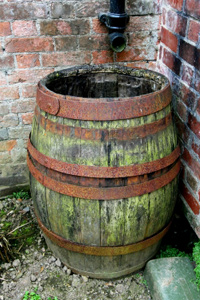
Every farmhouse had a rain barrel. The hot dusty days of summer were modified by the 50 gallon barrel that caught rainwater and held it for the time when the sky turned brass and evening lightning on the far horizon was a mockery to the parched earth. The daily rains of Dog Days that left steamy afternoons and sticky evenings disappeared. Lakes and creek beds became cracked slabs of mud where clear and refreshing water had earlier splashed with life and activity.rain-barrel-1

Gourd dippers quenched the thirst

The water pumped by a hand pump in the well shelter was too precious to waste. Well water taken into the farm kitchen was in buckets and held water. Gourd dippers to quench the human thirst or cook meals. Well water was pumped for Monday’s washing, but the used water was used for flowers and scrubbing floors after clothes were clean.

Rain water was used for washing

Rain water caught in the barrel from the gutters along the roof, was just the right purity for washing hair and watering the dozens of pots of flowers on the porch. After the sunset breezes began, a child could dip the bucket in the barrel and sparingly water the wilted plants around the edge of the porch. The smell of gasoline and dust from the gravel road going past dissipated when dew touched the grass and sweet smells from night blossoms hung in the air around the talkers rocking in the deepening darkness.old-rain-barrel

When summer rains returned, the tin roof and rain barrel echoed the sounds of abundance of water, and farmers slept grateful for rain to bless their crops.

Mama’s Hands

Mama’s Hands
Annice Barton Graham
By Dorothy Graham Gast
When we were growing up Mama’s hands were not beautifully manicured or white and soft. They could plant a garden, gather food for canning and make a meal for a family. Her hands could soothe a crying infant and smooth a seven year old’s cowlick
Mama’s hands washed the clothes and ironed them. . She could sew a dress from reclaimed feed sacks or piece and quilt a covering to keep out the cold Her tiny stitches held together the baby dresses we had worn .She taught us how to do embroidery, and sew a straight seam, and how to adjust the sewing machine when we got it out of whack. And she showed us the tablecloth she made for her trousseaux.
Mama’s hands chopped and picked the cotton to pay for school clothes, and handed Daddy a wrench when he repaired the plumbing or a hammer when they built a fence to keep the pigs in. She carried buckets of slop to feed the hogs when Daddy worked out of town. . Her hands milked the cow after she tossed down hay with a pitchfork.
Sometimes her hands were stained with muscadine juice when she made jelly or preserves. They were scratched when she picked blackberries for a special pie. Sometimes they burned when she chopped peppers for her famous pear relish that relatives craved for Christmas gifts. She gathered peaches and made cobblers for Sunday dinner guests. Four generations learned about cooking from her busy hands.
Neighbors knew that she would come when death invaded their home and make the routines of life go on when families were stricken. Her hands brought food and comfort and help.
When she helped me with my homework her hands showed how to make a map or chart a graph.. When she read our reports, her finger pointed out the errors to be corrected. And found information in books that was just the proof we needed.
Mama’s hands could give a pat on the back or a spank a little lower if correction was needed. They could feel a fever on a child’s forehead and place a cool cloth on the face of the sick. No matter how sick you were, you always felt better when Mama got there even after you were all grown up.
Most of all the hands were open just like her heart and willing to put things right that had gone awry. They taught children to pray and to sit quietly during church service and sometimes pinched a rebellious worshiper who didn’t..
Strong and skilled, her hands signaled for workers as they followed her lead preparing school lunches, and signed the beautiful rituals of the Eastern Star while she was Worthy Matron.
When she became the family matriarch, she loved to have her hair styled and nails manicured. And enjoyed the dress up clothes and evening dresses she missed earlier. The years gave her grace and wisdom from a life well lived.
No, Mama’s hands were not pretty, but they were beautiful to all of us

Annice Deane Barton was shy, almost painfully so when she married Lawrence (Buster) Graham during the hard years of the DEPRESSION. In their minds it was always in capital letters. As many young couples of that time they lived with relatives so share household expenses.

When I was born in 1936 the delivery was in Druid City Hospital in the location where the University Health Central was located most recently. Daddy always said that when I was born he had two nickels. One paid for a phone call to announce my arrival to family and the other to celebrate with a cup of coffee.
During WWII we lived in Pascagoola, Mississippi where Daddy worked in the US Corps of Engineers Boatyard, while mama took in laundry and cared for her three small children and provided lodging, food, and laundry for boarders, a common practice in a town that had too quickly outgrown space for the many workers flooding in to work at Ingall’s shipyard. The long hours and hard work were no more difficult than the life she experienced on a farm in Ralph, Alabama.
When my brother John’s asthma grew dangerous, doctors recommended that the family move back to Alabama to a dryer climate, and we returned to the home my parents had built on the Graham home place. Mama worked side by side with Daddy as they scratched a living on the farm and he worked in town.
Since our property adjoined the Romulus School property she was much involved in P. T. A. and other school support work. In the 1959 she was hired to work in the Romulus lunchroom and was made School lunch manager at Myrtlewood School at Fosters when the Ralph, Romulus and Fosters were consolidated in a new building near highway 11 at Fosters. She loved the school and the students loved her. When my children called her Mama Annice the name spread through the school and community and became her principal address at home school, and in the community.
As her children left her nest, she and Daddy enjoyed the Eastern Star, cooking for the Masonic events, church work, and working at Myrtlewood. When Grandma Graham had a stroke, she and Daddy left their home for the big Graham house to help care for Grandma. Daddy had been fighting cancer for several years, working between surgeries and convalescences. After Grandma died Mama Annice and Daddy moved in with Mr. Roy Burroughs to care for him and Billy Oliver, a patient from VA hospital who lived on the farm. Daddy and Mr. Roy enjoyed good times until Daddy’s and Mr. Roy’s deaths in 1976. A few months later Mama moved back to her home.
Her life was marked with hard work and responsibility, but she sat an example of leadership and service in her church and community. When someone died she was among the first with food and company for the grieving family. She knew how to quietly do the needed mundane tasks while families struggled with the decisions and grief a death brings. She went to stay with new mothers helping with the tiny babies as the mothers grew stronger.
When the Romulus Fire Department was established 200 yards from her front porch she gave sacrificially to provide fire protection and emergency care for the “old folks’ in the neighborhood, though she was older than most. She organized bake sales, and baked many cakes herself to help raise seed money for the government grants those departments depend on.
She started the practice of taking drinks and food to the church whenever there were funerals so the sorrowing family could have refreshment during the difficult time while the grave was closed and made ready for family viewing. When church elders voted to lock the doors when graveside services were held for nonresidents, she defied their ruling by providing hot coffee, sandwiches, and deserts to the next funeral which happened to be with a prominent family on a freezing day.

There was such a positive response that immediately the policy was established that the church always provide for the grieving..
When she was diagnosed with ovarian cancer at 87, she chose to come home and spend her remaining days surrounded by family. In the 27 days that followed, at least two members of family were near her hospital bed at all times. Neighbors and friends made pilgrimages to visit, and even the preschool great grandchildren were allowed to continue visiting Mama Annice.

Visitors whispered that there was a special feeling about her home and atmosphere around the hospital bed. Sometimes she was in pain or cross showing the strong will that she was known for, but she chose her ways of saying goodbye, even resisting pain medicines, so she could be more aware of those around her. On her last weekend family gathered around her bed as a granddaughter and girls trio sang a concert for her and not a dry eye could be seen.
Mama Annice blessed hundreds of lives and set a high standard of Christian service for her descendants and friends.


Mama’s Hands

Annice Barton Graham

By Dorothy Graham Gast

When we were growing up Mama’s hands were not beautifully manicured or white and soft. They could plant a garden, gather food for canning and make a meal for a family. Her hands could soothe a crying infant and smooth a seven year old’s cowlick

Mama’s hands washed the clothes and ironed them. . She could sew a dress from reclaimed feed sacks or piece and quilt a covering to keep out the cold Her tiny stitches held together the baby dresses we had worn .She taught us how to embroidery, and sew a straight seam, and how to adjust the sewing machine when we got it out of whack. And she showed us the tablecloth she made for her trousseaux.

Mama’s hands chopped and picked the cotton to pay for school clothes, and handed Daddy a wrench when he repaired the plumbing or a hammer when they built a fence to keep the pigs in. She carried buckets of slop to feed the hogs when Daddy worked out of town. . Her hands milked the cow after she tossed down hay with a pitchfork.

Sometimes her hands were stained with muscadine juice when she made jelly or preserves. They were scratched when she picked blackberries for a special pie. Sometimes they burned when she chopped peppers for her famous pear relish that relatives craved for Christmas gifts. She gathered peaches and made cobblers for Sunday dinner guests. Four generations learned about cooking from her busy hands.

Neighbors knew that she would come when death invaded their home and make the routines of life go on when families were stricken. Her hands brought food and comfort and help.

When she helped me with my homework her hands showed how to make a map or chart a graph.. When she read our reports, her finger pointed out the errors to be corrected. And found information in books that was just the proof we needed.

Mama’s hands could give a pat on the back or a spank a little lower if correction was needed. They could feel a fever on a child’s forehead and place a cool cloth on the face of the sick. No matter how sick you were, you always felt better when Mama got there even after you were all grown up.

Most of all the hands were open just like her heart and willing to put things right that had gone awry. They taught children to pray and to sit quietly during church service and sometimes pinched a rebellious worshiper who didn’t..

Strong and skilled, her hands signaled for workers as they followed her lead preparing school lunches, and signed the beautiful rituals of the Eastern Star while she was Worthy Matron.

When she became the family matriarch, she loved to have her hair styled and nails manicured. And enjoyed the dress up clothes and evening dresses she missed earlier. The years gave her grace and wisdom from a life well lived.

No, Mama’s hands were not pretty, but they were beautiful to all of us

Annice Deane Barton was shy, almost painfully so when she married Lawrence (Buster) Graham during the hard years of the DEPRESSION. In their minds it was always in capital letters. As many young couples of that time they lived with relatives so share household expenses. When I was born in 1936 the delivery was in Druid City Hospital in the location where the University Health Central was located most recently. Daddy always said that when I was born he had two nickels. One paid for a phone call to announce my arrival to family and the other to celebrate with a cup of coffee.

During WWII we lived in Pascagoola, Mississippi where Daddy worked in the US Corps of Engineers Boatyard, while mama took in laundry and cared for her three small children and provided lodging, food, and laundry for boarders, a common practice in a town that had too quickly outgrown space for the many workers flooding in to work at Ingall’s shipyard. The long hours and hard work were no more difficult than the life she experienced on a farm in Ralph, Alabama.

When my brother John’s asthma grew dangerous, doctors recommended that the family move back to Alabama to a dryer climate, and we returned to the home my parents had built on the Graham home place. Mama worked side by side with Daddy as they scratched a living on the farm and he worked in town.

Since our property adjoined the Romulus School property she was much involved in P. T. A. and other school support work. In the 1959 she was hired to work in the Romulus lunchroom and was made School lunch manager at Myrtlewood School at Fosters when the Ralph, Romulus and Fosters were consolidated in a new building near highway 11 at Fosters. She loved the school and the students loved her. When my children called her Mama Annice the name spread through the school and community and became her principal address at home school, and in the community.

As her children left her nest, she and Daddy enjoyed the Eastern Star, cooking for the Masonic events, church work, and working at Myrtlewood. When Grandma Graham had a stroke, she and Daddy left their home for the big Graham house to help care for Grandma. Daddy had been fighting cancer for several years, working between surgeries and convalescences. After Grandma died Mama Annice and Daddy moved in with Mr. Roy Burroughs to care for him and Billy Oliver, a patient from VA hospital who lived on the farm. Daddy and Mr. Roy enjoyed good times until Daddy’s and Mr. Roy’s deaths in 1976. A few months later Mama moved back to her home.

Her life was marked with hard work and responsibility, but she sat an example of leadership and service in her church and community. When someone died she was among the first with food and company for the grieving family. She knew how to quietly do the needed mundane tasks while families struggled with the decisions and grief a death brings. She went to stay with new mothers helping with the tiny babies as the mothers grew stronger.

When the Romulus Fire Department was established 200 yards from her front porch she gave sacrificially to provide fire protection and emergency care for the “old folks’ in the neighhood, though she was older than most. She organized bake sales, and baked many cakes herself to help raise seed money for the government grants those departments depend on.

.She started the practice of taking drinks and food to the church whenever there were funerals so the sorrowing family could have refreshment during the difficult time while the grave was closed and made ready for family viewing. When church elders voted to lock the doors when graveside services were held for nonresidents, she defied their ruling by providing hot coffee, sandwiches, and deserts to the next funeral which happened to be with a prominent family on a freezing day. There was such a positive response that immediately the policy was established that the church always provide for the grieving..

When she was diagnosed with ovarian cancer at 87, she chose to come home and spend her remaining days surrounded by family. In the 27 days that followed, at least two members of family were near her hospital bed at all times. Neighbors and friends made pilgrimages to visit, and even the preschool great grandchildren were allowed to continue visiting Mama Annice. Visitors whispered that there was a special feeling about her home and atmosphere around the hospital bed. Sometimes she was in pain or cross showing the strong will that she was known for, but she chose her ways of saying goodbye, even resisting pain medicines, so she could be more aware of those around her. On her last weekend family gathered around her bed as a granddaughter and girls trio sang a concert for her and not a dry eye could be seen.

Mama Annice blessed hundreds of lives and set a high standard of Christian service for her descendents and friends.



ANNICE BARTON GRAHAM  1913-2001

By Dorothy Graham Gast

When we were growing up Mama’s hands were not beautifully manicured or white and soft. They were tanned and caroused, criss-crossed with scars from thorns and cuts.   But they could plant a garden, gather food for canning and make a meal for a family. Her hands could soothe a crying infant and smooth a seven year old’s cowlick

Mama’s hands washed the clothes and ironed them. . She could sew a dress from reclaimed feed sacks or piece and quilt a covering to keep out the cold Her tiny stitches held together the baby dresses we had worn .She taught us how to embroidery, and sew a straight seam, and how to adjust the sewing machine when we got it out of whack. And she showed us the eyelet tablecloth she made from pieced  fertilizer sacks for her trousseaux.

Mama’s hands chopped and picked the cotton to pay for school clothes, and handed Daddy a wrench when he repaired the plumbing, or a hammer when they built a fence to keep the pigs in. She carried buckets of slop to feed the hogs when Daddy worked out of town.  Her hands milked the cow after she tossed down hay with a pitchfork.

Sometimes her hands were stained with muscadine juice when she made jelly or preserves. They were scratched when she picked blackberries for a special pie. Sometimes they burned when she chopped peppers for her famous pear relish that relatives craved for Christmas gifts. She gathered peaches and made cobblers for Sunday dinner guests. Four generations learned about cooking from her busy hands.

Neighbors knew that she would come when death invaded their home and make the routines of life go on when families were stricken. Her hands brought food and comfort and help.

When she helped me with my homework her hands showed how to make a map or chart a graph.. When she read our reports, her finger pointed out the errors to be corrected. And found information in books that was just the proof we needed.

Mama’s hands could give a pat on the back or a spank a little lower if correction was needed. They could feel a fever on a child’s forehead and place a cool cloth on the face of the sick. No matter how sick you were, you always felt better when Mama got there even after you were all grown up.

Most of all the hands were open just like her heart and willing to put things right that had gone awry. They taught children to pray and to sit quietly during church service and sometimes pinched a rebellious worshiper who didn’t.

Strong and skilled, her hands signaled for workers as they followed her lead preparing school lunches, and signed the beautiful rituals of the Eastern Star while she was Worthy Matron.

When she became the family matriarch, she loved to have her hair styled and nails manicured. And enjoyed the dress up clothes and evening dresses she missed earlier. The years gave her grace and wisdom from a life well lived.

No, Mama’s hands were not pretty, but they were beautiful to all of us

Annice Deane Barton was shy, almost painfully so when she married Lawrence (Buster) Graham during the hard years of the DEPRESSION. In their minds it was always in capital letters. As many young couples of that time they lived with relatives so share household expenses. When I was born in 1936 the delivery was in Druid City Hospital in the location where the University Health Central was located most recently. Daddy always said that when I was born he had two nickels. One paid for a phone call to announce my arrival to family and the other to celebrate with a cup of coffee.

During WWII we lived in Pascagoola, Mississippi where Daddy worked in the US Corps of Engineers Boatyard, while mama took in laundry and cared for her three small children and provided lodging, food, and laundry for boarders, a common practice in a town that had too quickly outgrown space for the many workers flooding in to work at Ingall’s shipyard. The long hours and hard work were no more difficult than the life she experienced on a farm in Ralph, Alabama.

When my brother John’s asthma grew dangerous, doctors recommended that the family move back to Alabama to a dryer climate, and we returned to the home my parents had built on the Graham home place. Mama worked side by side with Daddy as they scratched a living on the farm and he worked in town.

Since our property adjoined the Romulus School property she was much involved in P. T. A. and other school support work. In the 1959 she was hired to work in the Romulus lunchroom and was made School lunch manager at Myrtlewood School at Fosters when the Ralph, Romulus and Fosters were consolidated in a new building near highway 11 at Fosters. She loved the school and the students loved her. When my children called her Mama Annice the name spread through the school and community and became her principal address at home school, and in the community.

As her children left her nest, she and Daddy enjoyed the Eastern Star, cooking for the Masonic events, church work, and working at Myrtlewood. When Grandma Graham had a stroke, she and Daddy left their home for the big Graham house to help care for Grandma. Daddy had been fighting cancer for several years, working between surgeries and convalescences. After Grandma died Mama Annice and Daddy moved in with Mr. Roy Burroughs to care for him and Billy Oliver, a patient from VA hospital who lived on the farm. Daddy and Mr. Roy enjoyed good times until Daddy’s and Mr. Roy’s deaths in 1976. A few months later Mama moved back to her home.

Her life was marked with hard work and responsibility, but she sat an example of leadership and service in her church and community. When someone died she was among the first with food and company for the grieving family. She knew how to quietly do the needed mundane tasks while families struggled with the decisions and grief a death brings. She went to stay with new mothers helping with the tiny babies as the mothers grew stronger.

When the Romulus Fire Department was established 200 yards from her front porch she gave sacrificially to provide fire protection and emergency care for the “old folks’ in the neighhood, though she was older than most. She organized bake sales, and baked many cakes herself to help raise seed money for the government grants those departments depend on.

.She started the practice of taking drinks and food to the church whenever there were funerals so the sorrowing family could have refreshment during the difficult time while the grave was closed and made ready for family viewing. When church elders voted to lock the doors when graveside services were held for nonresidents, she defied their ruling by providing hot coffee, sandwiches, and deserts to the next funeral which happened to be with a prominent family on a freezing day. There was such a positive response that immediately the policy was established that the church always provide for the grieving..

When she was diagnosed with ovarian cancer at 87, she chose to come home and spend her remaining days surrounded by family. In the 27 days that followed, at least two members of family were near her hospital bed at all times. Neighbors and friends made pilgrimages to visit, and even the preschool great grandchildren were allowed to continue visiting Mama Annice. Visitors whispered that there was a special feeling about her home and atmosphere around the hospital bed. Sometimes she was in pain or cross showing the strong will that she was known for, but she chose her ways of saying goodbye, even resisting pain medicines, so she could be more aware of those around her. On her last weekend family gathered around her bed as a granddaughter and girls trio sang a concert for her and not a dry eye could be seen.

Mama Annice blessed hundreds of lives and set a high standard of Christian service for her descendents and friends.